.svg "Back to home")


Shrinkage Isn’t the Only Loss Warehouses Should Worry About
In warehouses and distribution centers, “loss” typically refers to inventory that goes missing. The National Retail Federation’s 2023 National Retail Security Survey found that shrinkage cost retailers an average of 1.6% of total sales.
Much of what operations and facilities leaders lose every day isn’t reflected in shrink reports. Instead, it reveals itself through delayed shift starts, workarounds intended to bypass processes, congestion at entrances and exits, and exceptions granted on the fly that slowly become unofficial policy. Loss comes in hours, labor dollars spent beyond scheduled shift times, and operational inefficiencies caused by unmanaged movement and congestion. Compliance and operational risks arise when leadership can’t identify who’s in the facility or why they’re there.
Shrinkage is measurable. But how much time, labor, compliance exposure, and operational risk is your organization losing every day because of movement issues that are considered “just the way things are?”
Lost Time: How Movement Loss Drains Warehouse Labor Dollars
Labor is typically a warehouse or distribution center’s largest expense. Payroll budgets frequently account for 50–70% of total operating costs. Much of that loss doesn’t originate with employee performance. Instead, it starts with the friction people encounter as they move through your facility.
Hundreds of employees may arrive at your facility within minutes of each other. Entrances can quickly become congested as people try to access the facility at shift start, while supervisors may start waving employees through before their badge is read to prevent the backlog from spiraling into missed production goals. Some employees arrive on time but are delayed by crowded entrances. Each delayed employee may lose only 1 to 3 minutes of productivity, but when hundreds of employees experience delays over multiple shifts across an entire year, those minutes equate to thousands of labor hours paid for and never recovered.
What Happens When Exceptions Become Informal Policy
Staffing shortages, peak volume, or pressure to maintain throughput often lead to shortcuts.
Exceptions may start innocently enough. A contractor is allowed to cut in line because a supervisor recognizes them. A supervisor holds a door open to keep a line from forming. A temporary access exception is granted during a staffing shortage and not revisited. A guest is permitted to bypass normal procedures because no one wants to slow down operations.
These are often necessary adjustments to keep things running.
But over time, these choices change how movement is managed within the facility. Procedures meant to control access become informal. Tracking of movement through a facility is assumed rather than validated. Blind spots form because leadership assumes systems are capturing data when they’re not. Before your team knows it, the most critical insight into operational warehousing has been lost —awareness of who’s in the facility and why.
Delayed Starts and Bottlenecks Lead to Operational Friction
Bottlenecks at facility entrances create congestion that delays shift starts and clogs up workflows. Warehouse teams don’t begin work on time, and picking falls out of sequence. Equipment sits idle while crews are assembled. Supervisors spend time troubleshooting delays rather than coaching production. One slowdown causes a ripple effect of lost productivity.
If people aren’t consistently where they need to be at the right time, the entire operation can come unhinged. Your employees may be putting in the effort, but throughput continues to decline because the system is out of balance.
Lack of Visibility Creates Compliance and Operational Risk
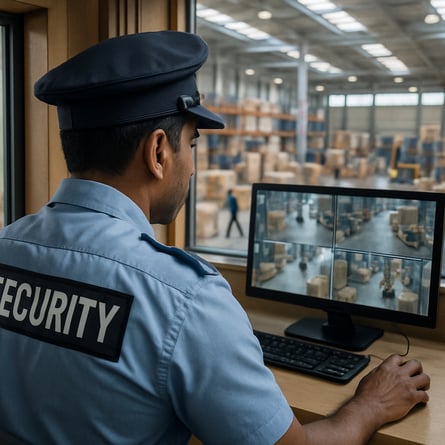
There will be times when your operations or security teams can’t answer a seemingly simple question: who’s on the floor right now? If your organization is hit with an incident, an emergency evacuation, or asked questions by auditors, you’ll wish you knew the answer.
Safety audits, compliance checks, and incident response all rely on historical data about who was in your facility and when. If your access and movement policies aren’t consistently enforced (or worse, aren’t established formally at all), your ability to answer those questions later will be impacted. Response efforts may be delayed. Investigations may take longer. And your organization’s exposure increases.
Organizations are typically judged on their ability to clearly explain what happened after the fact.
Today’s Workaround Is Tomorrow’s Process
Business leaders are often faced with two options if their current processes or technology can’t keep up with speed: let employees cut in line or lose valuable production time. When your systems can’t handle peak volume, teams make up the difference with workarounds.
Managers herd people through entrances. Security teams use discretion when granting access. Exceptions are allowed to keep things moving.
Over time, your entire operation adjusts to these new norms as bypassing the system becomes routine and informal workarounds become unofficial policy. But just because your organization has adapted to loss doesn’t mean it’s no longer impacting your bottom line.
Missing Inventory Is Only Part of the Loss Story
Every industry’s annual benchmark for shrinkage is well into the billions of dollars.
But that number doesn’t account for the thousands of labor hours lost due to congested entrances. It doesn’t reflect the impact of delayed shift starts or lost productivity from supervision having to facilitate people through entrances. We can quantify compliance exposure or operational risk in hindsight, but they’re rarely calculated into loss leading up to an incident.
There’s a broader definition of loss that most warehouses are incurring but not addressing. Because it can’t be captured on a spreadsheet.
A Diagnostic Tool for Hidden Loss
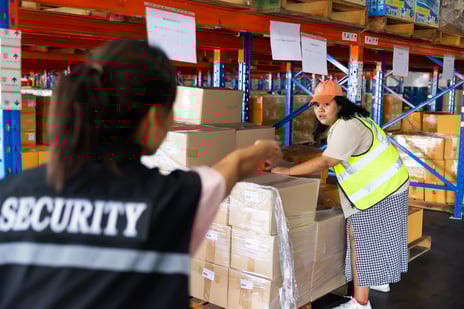
If employees, contractors, or visitors are regularly delayed in entering or exiting your facility, your operation is likely losing money on labor hours before work even begins. When employees are routinely let through your facility entrance without proper access during peak times, you’re losing visibility into who’s on the floor.
If your security or operations teams feel they’re regularly choosing between speed and control, your movement processes are being stretched to the limit. And if your facilities were to experience an incident or undergo an audit tomorrow, would you be able to identify every person who was in your building? If not, you’re likely losing valuable insight and information right now.
Movement Isn’t Always What It Seems
Industry benchmarks can help measure shrinkage. But the losses that quietly impact operations often go unmeasured. The real challenge isn’t just preventing inventory loss; it’s recognizing how delayed starts, unmanaged movement, and informal access practices are quietly draining productivity and increasing exposure every day.